Streaks, Slumps, and the Stories We Tell Ourselves at the Table

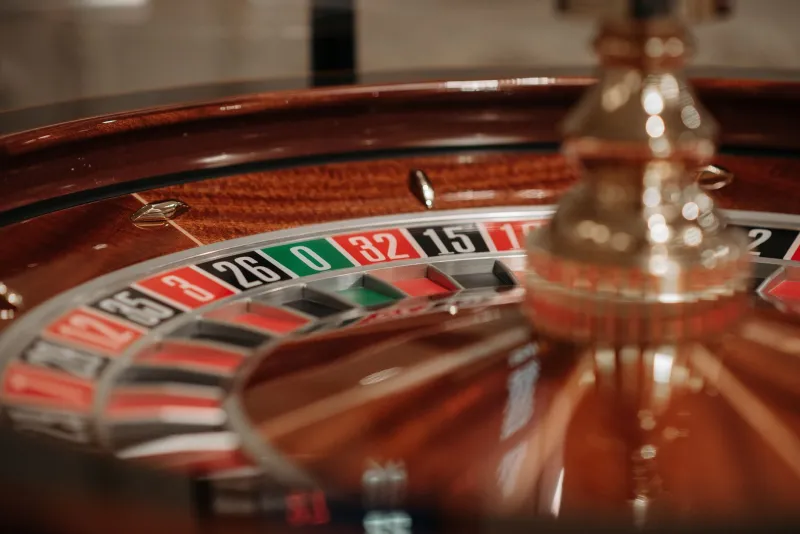
Photo by Photo by Ferenc Almasi on Unsplash on Unsplash
Imagine flipping a fair coin ten times and getting heads eight of those times. You'd probably raise an eyebrow. You might start to wonder if the coin is rigged. You'd almost certainly expect tails to "catch up" on the next few flips.
None of that instinct is correct — and understanding why it's wrong is the foundation of smarter casino play.
Variance is one of those words that sounds technical but describes something deeply human. It's the reason a winning streak feels like destiny and a losing run feels like a personal attack. It's also, if you understand it properly, one of the most reassuring concepts in all of gambling.
The Math Doesn't Know You Exist
Here's the core truth that casino variance forces you to confront: the numbers don't care. Not about your birthday, not about your losing streak, not about the fact that you've been "due" for a win for the last forty-five minutes.
Each spin of a roulette wheel, each deal of a blackjack shoe, each roll of the dice — these are independent events. The outcome of the last one has zero mathematical influence on the next one. The wheel has no memory. The deck (once shuffled) has no agenda.
This is called statistical independence, and it's the concept that casino games are built on. It's also the concept that human brains are spectacularly bad at accepting.
Why Your Brain Sees Patterns That Aren't There
Neuroscientists have a name for the tendency to perceive meaningful patterns in random data: apophenia. It's the same cognitive quirk that makes people see faces in clouds and hear messages in static. For most of human history, this pattern-recognition instinct was a survival advantage. Spotting the shape of a predator in the undergrowth — even if it turned out to be a shadow — was a much safer error than missing a real threat.
Fast forward to a casino floor, and that same hardwired instinct becomes a liability. Your brain watches the roulette ball land on red five times straight and immediately constructs a narrative. "Black is overdue." "This table is running hot." "I've found a pattern."
None of it is real. But it feels overwhelmingly real — and that feeling is exactly what makes variance so psychologically potent.
Hot Streaks Feel Like Skill. Cold Runs Feel Like Injustice.
Here's where things get particularly interesting. Research in behavioral economics consistently shows that people attribute winning streaks to their own choices and losing streaks to bad luck (or rigged systems). This asymmetry isn't just an ego defense mechanism — it actively shapes betting behavior in ways that cost money.
During a hot streak, players tend to increase their bets, convinced their read on the game is sharp. During a cold run, they often double down in an attempt to "correct" what feels like an imbalance. Both responses are emotionally driven, and both tend to amplify losses rather than prevent them.
The reality is more mundane and more liberating: variance works in both directions. A hot streak isn't a signal. A cold run isn't punishment. They're both just the natural, expected shape of random outcomes playing out over a sample size.
What Variance Actually Looks Like in Practice
Let's put some numbers to this. In a game with a 49% win rate (close to even money bets in many casino games), here's roughly what you'd expect over 100 rounds:
- About 49 wins and 51 losses on average
- But the actual distribution will vary — sometimes significantly
- A 10-round losing streak is statistically unusual but not rare; it happens to roughly 1 in 1,000 players in any given 100-round session
- A player running 60 wins out of 100 isn't necessarily skilled — they may just be sitting in the tail end of a normal distribution
The point isn't to memorize the math. The point is to internalize that the range of normal outcomes is much wider than intuition suggests. What feels like a historic cold streak is often just variance doing what variance does.
When Variance Is Actually Working in Your Favor
Here's the flip side that doesn't get enough attention: variance is also the reason recreational players can walk away winners on any given night, even in games where the house has an edge.
Over millions of bets, the house edge is relentless. But over a single evening? Variance creates real windows where the numbers break your way. A player with a solid session limit and a clear win target can absolutely catch a variance wave, lock in a profit, and leave ahead — even in a negative-expectation game.
This is why disciplined bankroll management and variance awareness work together. You're not trying to beat the math long-term. You're trying to be in a position to capitalize when the short-term numbers break your way, and to survive when they don't.
The 078922o Perspective: Respect the Numbers
At 078922o Casino, we talk a lot about owning your numbers — and nowhere does that matter more than in how you interpret variance. The players who get the most out of their gaming experience aren't the ones who've cracked some secret code. They're the ones who've made peace with randomness.
They don't panic during cold runs. They don't get reckless during hot ones. They understand that the streak they're on — good or bad — is just one small chapter in a much longer story that the math is writing.
That mental framework won't change the odds. But it will absolutely change how you play — and how you feel when you walk away from the table.
The numbers are neutral. The story you tell about them is up to you.