Cracking the Code: A Practical Guide to the Numbers That Actually Drive Your Casino Results
Photo: US government, Public domain, via Wikimedia Commons
At 078922o Casino, we've built our whole identity around numbers — and not just because they look cool in a domain name. Numbers are the actual language of gaming. Every game you play is governed by a set of mathematical relationships that determine, over time, how much you're likely to win or lose. The players who understand those relationships make smarter decisions. The ones who don't are essentially flying blind.
This guide is for anyone who's ever seen the term "96% RTP" on a slot game and wondered what that actually means for their $50 session. Let's break it down.
Start Here: What Is House Edge, Really?
The house edge is the built-in mathematical advantage that every casino game has over the player. It's expressed as a percentage and represents the average amount of each bet the casino expects to keep over a very large number of plays.
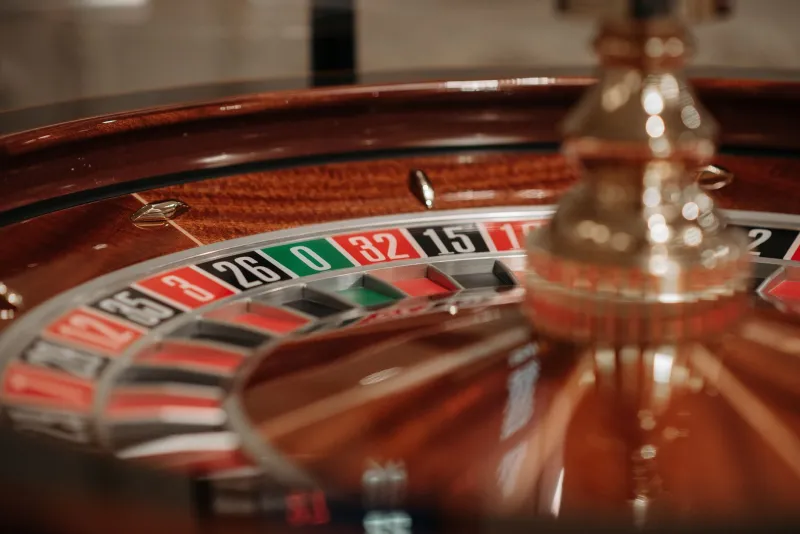
For example, American roulette has a house edge of about 5.26%. That doesn't mean you'll lose $5.26 every time you bet $100. What it means is that if you played thousands of $100 bets, your average loss would trend toward $5.26 per bet. In any single session, you could win big or lose everything — the house edge is a long-run statistical truth, not a per-hand guarantee.
Why does this matter? Because it lets you compare games directly. Blackjack with basic strategy can have a house edge under 0.5%. A poorly designed slot might run 10% or higher. If you're going to spend an evening gaming, knowing which games give you the best mathematical footing is genuinely useful information.
RTP: The Same Concept, Flipped Around
Return-to-Player (RTP) is just the house edge viewed from the other direction. A game with a 5% house edge has a 95% RTP. A slot advertising 96% RTP is returning 96 cents for every dollar wagered, on average, over millions of spins.
Here's where American players sometimes get tripped up: RTP is calculated over an enormous sample size — often millions of spins set by the game developer. Your individual session of 200 spins could look wildly different. You might hit a bonus round and walk away up 300%. You might drain your bankroll in 20 minutes. Both outcomes are statistically possible even on a high-RTP game.
The practical takeaway: RTP is a comparison tool, not a session promise. When you're choosing between two slot games, pick the one with higher RTP. Over time, across many sessions, it will be kinder to your bankroll. Just don't expect 96% back every time you sit down.
Variance: The Number Nobody Talks About Enough
If RTP tells you how much a game returns on average, variance (sometimes called volatility) tells you how it delivers those returns. This distinction is huge and wildly underappreciated.
Low variance games pay out smaller amounts more frequently. Think classic three-reel slots or blackjack — your balance tends to move in smaller increments, sessions feel steadier, and your bankroll lasts longer on the same budget.
High variance games pay out less often but in larger chunks. Many modern video slots fall here. You might spin for 40 minutes without a significant win, then hit a feature that pays 500x your bet. The average RTP might be identical to a low-variance game, but the experience is completely different.
Choosing the right variance for your situation is a practical skill:
- Small bankroll, short session? Low variance keeps you in the game longer.
- Larger budget, chasing a big hit? High variance games give you a shot at meaningful payouts, but you need to absorb the dry spells.
How to Use This Information to Set a Real Budget
Here's where data literacy pays off in actual dollars. Let's say you have $100 to spend at 078922o Casino and you're eyeing a slot with 95% RTP and medium variance, where you plan to bet $1 per spin.
With 95% RTP, the theoretical average loss per spin is $0.05. If you're spinning at roughly 400 spins per hour (a reasonable pace for online slots), your expected loss rate is around $20 per hour. That $100 budget could theoretically last five hours of play under average conditions.
Of course, variance means your actual experience will differ. But this kind of back-of-napkin math gives you a realistic frame. You're not budgeting based on vibes — you're budgeting based on the actual math of the game you chose.
Reading the Fine Print: Where to Find These Numbers
Most reputable online casino games publish their RTP and variance information in the game's info or paytable section. If a game doesn't disclose its RTP, that's a yellow flag worth noting. Certified games from major software providers will almost always have this data available.
For table games, the house edge is publicly known and easy to look up:
- Blackjack (basic strategy): ~0.5%
- Baccarat (banker bet): ~1.06%
- European Roulette: ~2.7%
- American Roulette: ~5.26%
- Keno: Can exceed 25%
These aren't secrets — they're math. And once you know them, you can make choices that align with your actual goals.
The Bigger Picture: Data as a Mindset
None of this eliminates luck from casino gaming — and honestly, that's part of what makes it fun. But there's a difference between informed play and uninformed play. When you understand house edge, RTP, and variance, you stop making decisions based on hunches and start making them based on real information.
At 078922o Casino, we believe the best players are the ones who stay curious about the numbers behind the games. Not because it guarantees wins — nothing does — but because it keeps you grounded, helps you manage your budget honestly, and makes the whole experience more sustainable and enjoyable over the long run.
Your numbers, your game, your win. But knowing what the numbers actually mean? That's where the smart play starts.