Why Casinos Don't Round Their Numbers (And Why That Should Matter to You)
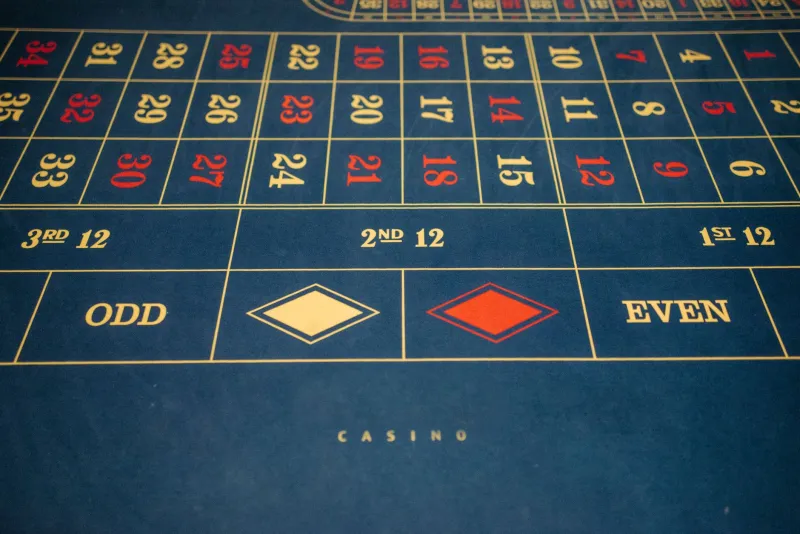
Here at 078922o Casino, numbers aren't just branding — they're the whole game. Every digit in our name means something, and if you look closely enough, the sequence 0-7-8-9-2-2 maps onto the kind of precise, deliberate math that drives every casino product on the market. That's not a coincidence. It's an invitation to pay attention.
So let's talk about one of the most overlooked details in online gaming: the decimal point.
The Number Nobody Talks About
Pick any slot machine, whether you're spinning at a Vegas resort or clicking through an online lobby at 2 a.m. on your couch in Ohio. Find the RTP — the Return to Player percentage. Odds are, it looks something like 96.48%, or 94.13%, or maybe 97.22%. Almost never a round number. Almost never a clean, easy-to-remember figure.
That's not an accident.
Casino operators engineer their games to specific decimal points because fractions of a percentage, multiplied across millions of spins, translate into enormous sums of money. A game set to 96.78% RTP versus one set to 97.00% might feel identical from the player's seat. Over 10 spins, you genuinely can't tell the difference. But over 100,000 spins — the kind of volume a busy online slot generates in a single week — that 0.22% gap represents thousands of dollars flowing in a very specific direction.
What RTP Actually Means in Practice
Let's break this down simply, because it's one of those concepts that sounds dry until you realize it's literally describing where your money goes.
RTP is a theoretical figure representing how much of total wagered money a game returns to players over an extended period. A 96% RTP means that for every $100 bet collectively across the game, $96 cycles back to players as winnings. The remaining $4 is the house edge — in this case, 4%.
Now here's where the decimal obsession kicks in. Say a game has an RTP of 96.78%. The house edge is 3.22%. Compare that to a game at 96.00% — house edge of 4.00%. That's a difference of 0.78 percentage points.
Sound tiny? Let's do the math.
If a player bets $5 per spin and averages 400 spins per hour, they're wagering $2,000 every hour. At a 4.00% house edge, the expected loss per hour is $80. At 3.22%, it drops to $64.40. That's $15.60 per hour back in the player's pocket — or, looked at from the other side, $15.60 per hour that the operator keeps by choosing the lower RTP.
Now multiply that across thousands of players, 24 hours a day, seven days a week. You see why operators care deeply about 0.78%.
The Engineering Behind the Edge
Game developers don't set RTPs by feel. They use mathematical modeling tools to calibrate volatility, hit frequency, and payout distributions until the long-run return lands exactly where the operator wants it. It's a balancing act: set the RTP too low, and players migrate to better-paying games. Set it too high, and the business model collapses.
The sweet spot tends to cluster in a fairly narrow band — most regulated online slots in the US market sit somewhere between 94% and 97.5% RTP. But within that band, every tenth of a percent is a deliberate choice.
Some operators go further, offering variable RTP settings. A single slot title might be licensable at 94%, 96%, or 97% depending on what the operator selects. Players at two different casinos could be spinning what looks like the same game but experiencing meaningfully different long-run outcomes — without any indication on screen that this is happening.
How to Decode the Numbers Before You Play
The good news: this information is almost always available if you know where to look.
Check the game's info panel. Reputable online slots display their RTP in the paytable or help screen. If you can't find it, that's itself a data point worth noting.
Look for third-party certifications. Games audited by labs like eCOGRA or GLI have their RTPs independently verified. That certification means the published number reflects actual game behavior, not just marketing copy.
Compare across the lobby. When you're browsing games, make RTP part of your selection criteria — the same way you'd compare prices before buying anything else. A half-percent difference in RTP might not feel like much, but as we've shown, it compounds fast.
Factor in volatility. A high-RTP game with extreme volatility can still drain your session bankroll before the math has time to average out. RTP is a long-run figure, and short sessions can deviate wildly from the theoretical return. Pair high RTP with lower volatility if you're trying to stretch your budget.
Why Round Numbers Don't Exist in This Business
Here's a mindset shift that might help: stop thinking of casino RTPs as approximations and start treating them as precise specifications. When a game is listed at 96.48%, that number was chosen intentionally. It wasn't rounded from 96.5% for simplicity. It was engineered to produce a specific margin across a specific distribution of outcomes.
That's actually kind of fascinating, once you sit with it. Every spin you take is participating in a mathematical structure that was built to tolerances tighter than most consumer products. The decimal point isn't a technicality — it's the whole architecture.
At 078922o Casino, we think players who understand this architecture play smarter, manage their bankrolls better, and ultimately get more out of every session. Knowledge doesn't change the math, but it changes how you engage with it. And that's the edge you actually control.
The Takeaway
The next time you load up a game and see an RTP like 96.78%, don't glaze over it. Ask yourself: what does that 0.78% gap from a round number actually mean for my real-money play? How many spins will I take this session? What's my hourly wager volume?
Run the numbers. Even rough math gives you a clearer picture of what you're working with than gut instinct ever will. And in a game defined by precise percentages, showing up with your own math is the closest thing to a genuine advantage a player can have.
Your numbers. Your game. Your wallet.