1,000 Spins, One Honest Spreadsheet: My 30-Day Experiment in Losing Slowly
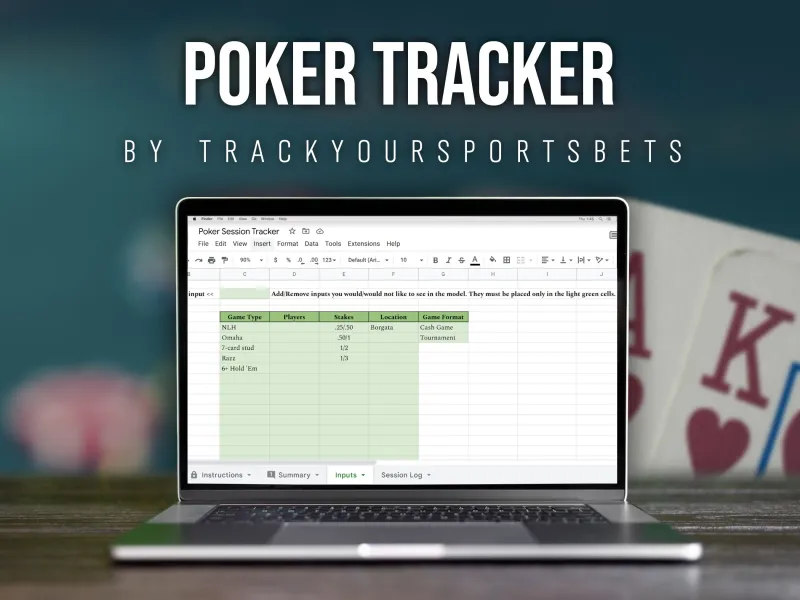
Photo: person tracking gambling data spreadsheet laptop notebook casino session, via i.etsystatic.com
I want to tell you I lost money last month because the slots were cold. That would be a comfortable story. It would also be a lie, and my spreadsheet knows it.
For 30 days, I tracked every wager I made at online casinos: game, bet size, outcome, session length, time of day, and — this part mattered most — a one-line note on my headspace. By the end, I had 1,000 logged spins, 41 sessions, and a dataset that said something I didn't want to hear: the games played exactly as expected. I didn't.
The Setup: Rules Before the First Spin
Before day one, I set three ground rules:
- A $600 monthly bankroll — money I was fully prepared to lose.
- A base bet of $0.50 per spin.
- Log everything, including the sessions I was ashamed of.
I mostly played online slots and a little blackjack, choosing games with published RTP around 96%. If the math held, I expected to lose roughly $20 to $40 over the month at my normal pace. Here's how it actually went.
The Headline Numbers
- Total wagered: $1,842 across 1,000 spins
- Total lost: $187
- Biggest single-session loss: $64
- Biggest single-session win: $41
- Sessions that ended at my planned stop time: 22 of 41
That last number is the one that should have scared me. Nearly half my sessions ran long. And when I broke the losses down by session type, a pattern emerged that no RTP chart had prepared me for.
Finding #1: Session Drift Was My Real Opponent
I planned most sessions for 30 minutes. The 22 sessions that respected that plan lost a combined $31. The 19 that ran over lost $156 — five times as much, in only slightly more total time.
Why? Because drift compounded. A 30-minute session that became 50 minutes meant 20 extra minutes of expected loss, sure. But the real damage was behavioral. Every drifted session, without exception, included at least one decision I wouldn't have made at minute 29. Bigger bets. New games. "One more bonus round." The clock wasn't just time — it was a firewall for my judgment, and once it lapsed, everything behind it went with it.
Finding #2: Wins Were More Dangerous Than Losses
This was the finding that genuinely surprised me. My four biggest losing sessions all started with early wins.
The sequence was identical every time: a hit in the first 15 minutes — usually $15 to $30 up — followed by an immediate bet increase. My notes from day 9 read, verbatim: "Up $22, raising to $1.50, clearly hot tonight." I finished that session down $47.
Across the month, spins made after a winning streak averaged $1.12 per spin. Spins made after a loss averaged $0.54. I wasn't chasing losses — I was celebrating wins with stake hikes, and the house edge ate the bigger bets just the same. My winnings-funded aggression cost me more than my losing streaks did.
Finding #3: The Chasing Was Subtler Than I Thought
I never had a dramatic chase-the-loss night. What I had instead was what I started calling "the taper": after a losing session, my next session's planned stop time quietly grew. Average planned session after a win: 28 minutes. After a loss: 44 minutes. My brain was scheduling extra time to fix the previous result, and it never once wrote that down as a decision.
The spreadsheet caught it because it didn't care how reasonable each individual extension sounded. Numbers don't negotiate.
What the Data Changed
I'm not writing this to say anyone should quit — my total loss of $187 was within expectations, and I enjoyed most of those spins. But the month taught me three things I now treat as rules:
- A timer is worth more than a loss limit. My loss limits held. My time limits didn't, and the time lapses caused the money damage.
- A win is a signal to cash out, not to raise. Every post-win bet increase in my log was a net negative over the month.
- The day after a loss needs a shorter plan, not a longer one. My taper instinct was the quietest and most expensive pattern in the whole dataset.
The Uncomfortable Conclusion
Over 1,000 spins, the games did what the math said they'd do. Every dollar I lost beyond expectation traced back to a moment of drift, a post-win raise, or a quiet schedule extension. The house edge never needed my bad luck. It just needed my bad habits.
Track your own play for a month. I promise the story your spreadsheet tells will be less about the games — and far more about you.